How Exchange Rate Margins Really Work (and How to Spot Them)
General information, not advice. This guide explains how things usually work. Fees, rules and products change and depend on your country and situation, so check the provider's or authority's own page before you act. See our disclaimer.
Some links may be affiliate links. They never change what we recommend. How we make money.
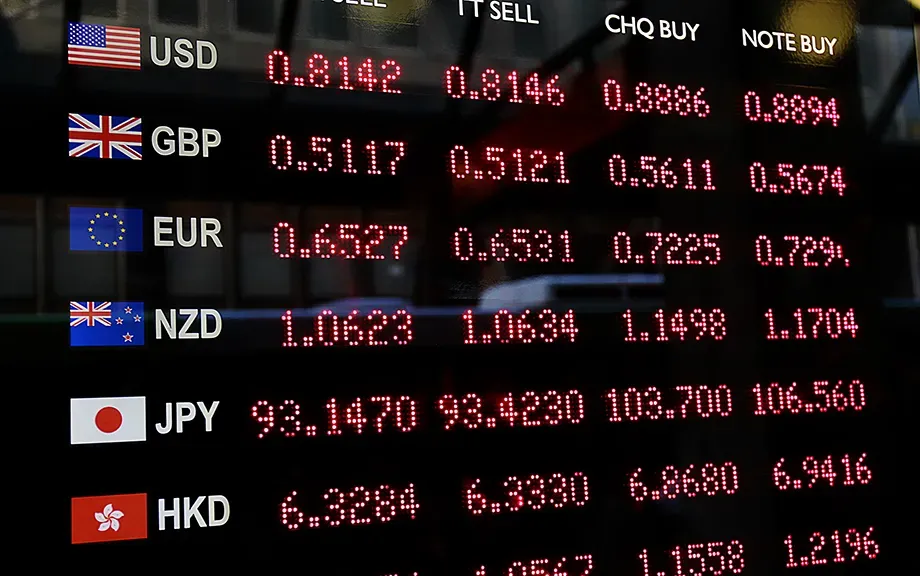
When you convert money from one currency to another, the number that matters most is rarely the fee. It is the exchange rate. Banks, wallets and transfer services almost never give you the real market rate. They give you a worse one and keep the difference. That difference is the exchange rate margin, and it is usually the biggest cost of an international transfer, yet it does not appear anywhere as a “fee”.
This guide explains what an exchange rate margin is, how to calculate it in a minute, what typical margins look like and how to keep them low. If you want a full comparison of providers and routes, see our guide to the cheapest ways to send money abroad.
The short answer
An exchange rate margin is the gap between the mid-market rate (the real market rate) and the rate you are offered. You find it by comparing the two:
Margin (%) = (mid-market rate − offered rate) ÷ mid-market rate × 100
If the margin is 3%, you are paying 3% of the amount in a hidden fee, on top of any visible fee.
What is the mid-market rate?
The mid-market rate, also called the interbank or spot rate, is the midpoint between the buy and sell prices of a currency on the global market, and it is the fairest rate you can use as a reference. It is the “real” rate you see on a financial site or search engine. In practice no consumer gets exactly this rate, because providers add a margin above it to make money.
Margin, spread, markup and fee: what is the difference?
These words are often used as if they mean the same thing, but they are slightly different:
| Term | What it means |
|---|---|
| Mid-market rate | The reference rate, with no margin |
| Exchange rate margin / markup | The percentage the provider adds to the rate (the hidden cost) |
| Spread | The gap between the rate at which a provider buys and sells a currency |
| Fee | A separate charge shown on top of the rate, flat or a percentage |
Your total cost is the margin plus any fees. The retail rate a bank or provider gives you always includes the provider’s profit margin, and that is why comparing only the visible fee can be misleading.
Where the margin hides
You can pay a margin in many situations:
- Bank transfers. Banks usually convert at their own retail rate. For a comparison of routes, see bank transfer vs money transfer app.
- Payment platforms and wallets. Many apply a conversion fee on top of the base rate. We compare the main ones in PayPal, Wise or Payoneer.
- Card payments abroad, including conversion at checkout.
- ATM withdrawals and currency exchange counters.
- Marketplace and platform payouts that convert automatically.
The cost stays hidden because it is built into the rate. If it appeared as a separate fee, customers could compare it easily, which is why a margin comparison matters more than a flat-fee comparison.
What do typical margins look like?
Margins differ widely, so treat the numbers below as rough ranges based on providers’ own guides, not as quotes:
| Where you convert | Reported margin over mid-market |
|---|---|
| Specialist and low-cost providers | From about 0.3% to 0.6% (some providers advertise even less) |
| Big banks (retail customers) | Often around 2% to 4%; one US-based guide cites 2% to 4% |
| Banks for small businesses | Often around 2% or more for a common currency pair |
| Foreign exchange markup fees built into the rate | About 2% to 3.5% typically |
| Airport exchange counters | Often 5% to 10% worse than the mid-market rate |
Most of these figures come from companies that sell cheaper alternatives, so they have an interest in showing high bank margins. Use them as a guide and check your own numbers.
How to calculate the margin
You need two numbers: the mid-market rate at the time of your transaction and the rate you were offered.
- Find the current mid-market rate from a neutral source, such as a central bank site or a financial data provider.
- Note the rate you were offered, or work it out: amount received ÷ amount converted.
- Apply the formula: (mid-market − offered) ÷ mid-market × 100.
- Add any fees to get the total cost.
If you are looking at a past transaction, compare your rate with the mid-market rate from the same time period, since rates move by the second.
A worked example (illustration only)
Suppose the mid-market rate is 1 USD = 0.90 EUR, and your provider offers 1 USD = 0.873 EUR.
- Margin = (0.90 − 0.873) ÷ 0.90 × 100 = 3%
- On 1,000 USD, you should get 900 EUR at the mid-market rate but receive 873 EUR.
- The hidden cost is 27 EUR.
If the provider also charges a 5 USD fee, the total cost is the 27 EUR margin plus the fee.
Watch the direction of the quote. If you are converting the other way (EUR to USD), the mid-market rate is about 1.111 USD per EUR, and a 3% margin would give you about 1.078. The method is the same, but the numbers look different, so always compare like with like.
You can skip the maths with our transfer fee calculator, which turns a fee and a margin into a total cost and shows how much the recipient gets.
Why “no fee” does not mean “free”
A provider can advertise “zero commission” and still earn money from the margin. A transfer with a visible fee of 0 and a margin of 3% costs more than a transfer with a visible fee of 5 USD and a margin of 0.3%. That is why the only fair comparison is the total cost, or the amount the recipient actually receives.
Cards, ATMs and airports
Margins also appear when you spend abroad:
- Dynamic currency conversion (DCC). If a shop or ATM offers to charge you in your home currency, it applies its own rate, which is usually worse than your card network’s. Always choose to pay in the local currency.
- ATMs. Some charge a fee in addition to the exchange rate, and some offer to convert at a poor rate.
- Airport and tourist exchange counters. They are among the most expensive places to convert, with rates often far from the mid-market.
For more on spending abroad, see how to avoid ATM fees and bad exchange rates abroad.
Weekend and out-of-hours markups
Currency markets are closed at weekends, so some providers add an extra markup on weekend conversions to cover the risk of the rate moving. Convert on a weekday when you can, and check your provider’s policy.
How to pay less
- Look up the mid-market rate before every conversion.
- Ask for the total cost, not just the fee, and compare the amount the recipient gets.
- Choose providers that show the mid-market rate and their fee separately.
- Receive money in the currency you hold, so nothing is converted on arrival. Our guide on how to avoid hidden currency conversion fees covers the settings and habits that help.
- Hold balances and convert on purpose. A multi-currency account lets you hold several currencies, and if you are new to the idea, read what a multi-currency account is.
- Convert in batches if the provider has a fixed fee.
- For large amounts, ask for a better rate and request the margin in writing. Providers often offer better terms to larger customers.
- Avoid converting at airports, in shops or at ATMs when you have a better option.
Margins vs market moves
Do not confuse the margin with the movement of the exchange rate itself. The margin is a cost you pay every time you convert. A rate move is a market change that can make your money worth more or less depending on timing, and nobody can predict it consistently. Waiting for a “better” rate can cost more than the margin you hoped to save. If you hold savings in several currencies, see how to protect your savings from currency swings.
Quick check: is this a good rate?
| If the margin is… | It usually means… |
|---|---|
| Under about 1% | A low-cost provider; good for most transfers |
| About 1% to 2% | Acceptable, but compare options |
| About 2% to 4% | Typical of many bank rates; likely to be improvable |
| Above about 4% | Expensive; look for another option |
These bands are a rule of thumb, not official categories.
Common mistakes to avoid
- Comparing only the visible fee.
- Trusting “zero fee” or “no commission” offers.
- Not checking the mid-market rate.
- Comparing a rate with an out-of-date mid-market rate.
- Mixing up the direction of the quote.
- Letting a bank or platform convert automatically.
- Converting at airports and exchange counters.
- Waiting for the “perfect” rate.
- Ignoring the weekend markup.
Frequently asked questions
What is an exchange rate margin?
The difference between the mid-market rate and the rate a provider gives you. The provider keeps it as profit.
How do I calculate the exchange rate margin?
Use (mid-market rate − offered rate) ÷ mid-market rate × 100, and compare the rate at the same moment in time.
What is a good exchange rate margin?
Lower is better. Specialist providers often charge well under 1%, while many banks charge a few percent. Your total cost also includes any fees.
Is the Google rate the mid-market rate?
Search engines and financial sites usually show a mid-market or close-to-mid-market rate, which is a useful reference, but the exact rate can differ slightly between sources and moments.
Why is my bank’s rate worse than the rate online?
Because the bank adds a margin to the mid-market rate. No consumer gets the exact mid-market rate.
Is it better to pay a fee or accept a margin?
Compare the total cost. A transparent fee with no margin is often cheaper than a “no fee” offer with a high margin.
Can I negotiate the exchange rate?
For larger amounts, often yes. Ask your provider for the margin and for a better rate.
Final thoughts
Exchange rate margins are easy to miss because they never appear as a separate charge, but they are among the easiest costs to cut. Check the mid-market rate, calculate the margin in a minute, compare the amount the recipient receives and choose providers that show their costs clearly. Over a year of regular conversions, small differences in the margin add up to real money.
This article is general information, not financial advice. Margins, fees and rules change and vary by provider and country. Information reviewed October 6, 2026.
Sources and further reading
Official pages and primary sources where you can check the rules, fees and rates discussed in this guide. They are updated by their publishers, so check them for the current figures before you decide.
- Euro foreign exchange reference rates (European Central Bank)
- Exchange rates database (Bank of England)
- Regulation (EU) 2021/1230 on cross-border payments, including currency conversion charges (EUR-Lex)
- Remittance Prices Worldwide (World Bank)